Errors in your calculations arise from using an incorrect number. With a passion for financial markets, Sunder Subramaniam merges his vast expertise in fundamental analysis. Practical market interpretation (trade planning), and price action are his primary areas of focus.
This count impacts profit targets (payout timing), and consistency rules if you engage in futures trading or use prop-firm evaluations. Institutional participation decreases during the summer months of July and August — leading to significant slowdowns. Fridays often witness a drop in volume as traders close their positions before the weekend, and Mondays typically start off sluggishly.
- Results become distorted when calendar days are used instead of business days, resulting in unrealistic performance evaluations.
- It aids in smart decision-making and planning.
- Most Indian brokers offer paper-trading accounts that simulate live market conditions.
Options typically expire on specific dates and times (usually Fridays for monthly expirations), while more expiration dates have been added with weekly and daily options. It is vital for individuals looking to harvest losses in December to be aware of the precise market calendar, including any early closures or half-days. There are multiple specific scenarios in which a precise knowledge of the trading calendar makes a significant impact on portfolio management and transaction execution. For the majority of long-term investors, the precise number of trading days within a year serves as background information rather than an active element of planning.

National holidays such as Veterans Day (Columbus Day), and observances like July 5 impact the total number of trading days in the U.S. financial markets. Historically — months like October have shown higher volatility due to various economic and institutional factors affecting the markets globally. Position traders, dealing in the timeframe of months to years, are least affected by the daily or annual count of market days, focusing more on long-term trends and fundamentals. Swing traders operate over several days or weeks, less affected by the exact number of trading days but more by the quality and opportunities presented during open market days. For a detailed list of all NYSE holidays and how they might affect your trading year, visit our article on the NYSE holiday schedule. To understand more about options trading hours and how to use them to your advantage, explore options trading hours.
With a user-focused share offer, Reddit announces an IPO valuation of $6.4 billion.
After 4 p.m. (when the major stock exchanges in the U.S. close), the after-hours trading period begins. As of October 2026, the NYSE calendar includes dates for holidays and early closures. Every day (William G.), the CMO at Phidias Propfirm, engages in developing rules and payouts for futures prop trading. Pick rules that pay you for good days, not for showing up. The question revolves around how long your account makes you wait — not simply how many days the market operates. This varies based on the firm and the account type.
Furthermore, there must be a capability to manage risk through appropriate position sizing and an understanding of the capital at risk per trade. The trading calendar is influenced by these holidays, making it essential to discuss their effects on the overall market and your trading entry and exit strategies. If traders aim to grow their account size by a predetermined percentage, establishing daily or weekly trading objectives is an excellent starting point.
The fifth mistake is IC Markets broker review forgetting the funding-stage rules. Some traders rush a challenge, hit a target, then realize the account still needs qualifying days or rule checks. Low-liquidity periods often include late Fridays (holiday weeks), the final days of December, and quiet pre-news sessions. Traders can also review the most volatile forex pairs to understand which currency pairs may offer stronger price movement during active sessions. Good traders reduce expectations around holiday weeks (major central bank events), and thin Friday conditions. A daily target is only useful if the risk needed to reach it still fits the account’s drawdown limits.

In navigating the financial markets, understanding the structure of trading days within different timeframes is fundamental. One overlooked piece of the trader’s tool chest can immediately transform chaos into an organized, well-constructed environment, and it’s as simple as a trading calendar. For anyone entering the market, this basic understanding is a useful place to start. As an investor or trader, understanding the number of trading days in a year is crucial for planning your investment strategy and managing your portfolio effectively. This article will help you understand a trading day, how many trading days in a year are there, and what factors influence their quantity. Relying on convention without understanding can quietly distort results, while precision builds.
I’ll dissect this structure to provide clarity on the number of trading days across annual (monthly), and weekly periods, taking into account business days and significant market closures. Investors may therefore need to adapt their strategies during these optimal trading periods to account for shorter or longer trading days. Understanding the number of trading days is pivotal for planning investment strategies and for the execution of trades. Keep an eye on the news and use reliable financial apps for real-time updates.
By combining solid knowledge of trading schedules with disciplined execution, you can transform theory into consistent results. With U.S. markets averaging around 252 sessions annually — aligning strategies to the official trading calendar ensures you avoid false assumptions and missed opportunities. Below are key considerations for traders aiming to stay aligned with the real trading calendar.
The outcome is about 252 days of trading.
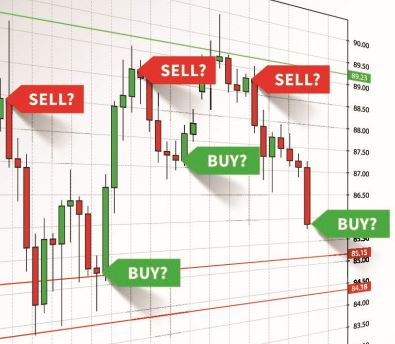
Instead of extrapolating holiday guidelines, other years are disregarded. Consequently, the apparent 365 days in a year condense to about 252 possible trading days. This resource provides you with crucial insights and tools necessary for successfully navigating the financial markets.
Schedule of Holidays and Market Closures
- Chasing mediocre setups on flat days erodes your account with commissions and small losses.
- Thus (market activity may become less predictable), and liquidity could decrease.
- Should such modifications be enacted, they might lead to extended trading sessions without necessarily increasing the number of trading days.
Five minutes of planning saves genuine confusion later. Bookmark the exchange holiday calendar at the start of every year. Annualised returns (daily profit targets), moving average periods all of these use trading days, not calendar days. Getting the trading day count right seems like a small detail, but it’s the kind of thing that separates an accurate performance review from a misleading one. Say you earned ₹74,100 in trading profits over 150 sessions and want to know your annualised return on a ₹5,00,000 account.
Keep in mind that understanding trading days and hours is merely one component of the larger picture in becoming a successful trader. Having a firm grasp of the numbers (particularly the trading days within a year), can greatly influence your trading strategy. Numbers drive the financial realm, and comprehending them is vital to harnessing its currents. She concentrates on evaluations from prop firms, funded account programs, and trading regulations. When calendar days are used in place of business days, results are skewed, leading to performative metrics that lack realism.
A trading day refers to any business day on which financial markets conduct buying and selling activities in securities. A common inquiry for traders looking to devise strategies or backtest is the number of trading days available within a year. Once you enter a funded brokerage account, there is no minimum requirement for trading days to request a payout, provided your balance exceeds the initial amount. The dynamic of the financial markets is influenced by weekends (holidays), and early market closures. A closed market presents a perfect chance to assess your trades (document your progress), and mentally prepare. Holiday rules for the futures market can vary depending on the asset class.